Things to Do in Congo in April
April weather, activities, events & insider tips
Low Season · Budget Friendly
April Weather in Congo
Long-run averages for April in Brazzaville
90°F (32°C)
High Temp
73°F (22°C)
Low Temp
6.6 inches (168 mm)
Rainfall
82%
Humidity
12
Sunny-Day UV
⚠ April afternoon downpours hit hard. Expect 25-40 mm (1-1.6 inches) in under an hour. Unpaved roads in Brazzaville flood fast. Laterite highways upcountry dissolve into impassable mud. Vehicles without four-wheel drive face real danger. Avoid routes outside the two main cities. This is non-negotiable.
⚠ Malaria peaks during wet season. Prophylaxis, bed nets, and DEET repellent are mandatory. These are not optional extras. Severe malaria treatment is scarce. Capable facilities exist only in Brazzaville and, to a lesser extent, Pointe-Noire. Prepare thoroughly. The risk is real.
⚠ The Congo River runs high in April. Strong currents and floating debris multiply pirogue hazards. Choose motorised boats with experienced operators only. Skip river crossings during or after heavy rain. Visibility plummets. Currents strengthen. The margin for error shrinks to nothing.
Is April Right for You?
Weigh the advantages and considerations before booking
Advantages
- + April rains transform Odzala-Kokoua National Park into a cathedral of green so dense the canopy drips for hours after the last downpour. Western lowland gorillas forage closer to clearings where new growth runs thickest. Sightings grow more intimate now. During dry months, they retreat deeper into the forest interior.
- + You will likely be the only foreign traveler at most sites. Congo receives a fraction of the visitors that neighbouring countries attract. April's wet season thins even that trickle to almost nothing. Gorilla tracking permits, guesthouse availability, and river transport are yours without competition. No advance scrambling required.
- + Brazzaville's food stalls and maquis restaurants along Avenue de la Paix and the Poto-Poto quarter are at their most generous in April. The rains bring fresh-water fish flooding into the Congo River's tributaries. Markets pile up with fat capitaine. Smoked over green wood until the flesh turns copper. It flakes apart at a touch.
- + Accommodation rates across the country sit well below their dry-season peaks. Operators running gorilla-tracking expeditions out of Brazzaville and Mbomo are more willing to negotiate. Group size and itinerary flexibility open up when they are not managing a waitlist. Ask for what you want.
Considerations
- − Unpaved roads, which means most roads outside Brazzaville and Pointe-Noire, become treacherous in April. The laterite turns to a rust-red slick that swallows tyres. The 700 km (435 miles) overland route from Brazzaville to Odzala-Kokoua stretches from a hard two-day drive to three or four days of digging out. Internal flights exist. Schedules shift without much warning.
- − The humidity at 82% soaks your shirt before breakfast and never lets it dry. Combined with Brazzaville's average high of 32°C (90°F), midday outdoor activity becomes a battle against your own core temperature. The equatorial heat does not let up at night. Lows sit around 22°C (73°F). Little breeze reaches the capital.
- − Malaria transmission peaks during the wet season. April sits squarely in that window. Prophylaxis is not optional. Full stop. Mosquitoes are thick near standing water after each downpour. Even well-screened lodges in the forest reserves cannot keep them out entirely at dusk. Pack repellent.
Best Activities in April
Top things to do during your visit
Western Lowland Gorilla Tracking in Odzala-Kokoua
Odzala-Kokoua National Park, deep in the northwestern Congo Basin, holds one of the densest populations of western lowland gorillas left on earth. April's wet season is a trade-off that favours the patient. The forest floor is a squelch of mud and leaf litter that soaks through boots in minutes. The air under the canopy smells of wet bark, crushed fungi, and the faintly sweet rot of fallen fruit. Gorilla families tend to linger in bai clearings where fresh vegetation sprouts after each rain. The habituated Neptuno and Jupiter groups are often easier to locate when they are feeding rather than moving. Tracking starts at dawn from the Mbomo sector. Typically a two- to four-hour walk with Bantu and BaAka trackers whose barefoot navigation of the root-laced trails puts your hiking boots to shame. You will hear the gorillas before you see them. A low chest-rumble vibrates through the humid air. Then the silverback appears at maybe 7 metres (23 feet), indifferent to your presence in a way that is somehow more unsettling than aggression. Book through specialist conservation operators at least two to three months ahead, even in low season. Permits are capped. Logistics require bush-plane coordination. See current options in the booking section below.
Booking Tip: Permit allocation is tiny and managed through a handful of licensed conservation concessions. Book a minimum of eight to twelve weeks in advance even for April. The bottleneck is not demand but transport logistics. Confirm whether your operator includes the charter flight from Brazzaville to the Mbomo airstrip. You may be arranging that separately. Expect the full expedition to take three to five days from Brazzaville and back.
Lesio-Louna Gorilla Reserve Day Expedition
Lesio-Louna sits closer to Brazzaville and far more accessible than Odzala. It rests on the Batéké Plateau about 140 km (87 miles) north of the capital. The reserve is a reintroduction sanctuary for orphaned western lowland gorillas. April's green season turns the rolling savanna-forest mosaic into something that looks more like a Congolese Scotland. Wet grass and low clouds snag on hilltops. Not the equatorial jungle most visitors expect. The gorillas here are semi-habituated. Raised by human caretakers and released into protected forest patches where they forage independently but tolerate guided visits. The drive from Brazzaville crosses the Lefini River, swollen and coffee-brown in April, on a ferry that runs when it runs. Budget the entire day. Bring more water than you think you need. The reserve's guides walk you through gallery forest where the canopy closes overhead and sound shifts from wind and birdsong to the crack and rustle of gorillas stripping bark. It is rawer and less polished than an East African safari. That is exactly the point.
Booking Tip: Arrange through Brazzaville-based operators who handle the vehicle, ferry crossing, and reserve entry as a package. Book at least two weeks ahead in April. Less for availability, more because logistics coordination in the wet season requires lead time. The road condition between Brazzaville and the reserve deteriorates significantly after sustained rain. Confirm road status with your operator the day before departure. Check the booking section below for current guided options.
Congo River Pirogues and Fishing Villages
The Congo River in April is enormous. The wet season pushes the water level high enough that the current sweeps past Brazzaville's Corniche with visible force, carrying hyacinth islands and the occasional dugout pirogue loaded with charcoal or smoked fish headed for the Marché Total. Hiring a motorised pirogue from the rapids area upstream of the city, near the neighbourhood of Kintélé, puts you on the widest stretch of river in Africa, with Kinshasa's skyline to the south and the green wall of Île Mbamou splitting the channel ahead. The smell is river mud and diesel and grilled maize from fishing camps on the sandbars. April's high water means the pirogue operators can navigate channels that are sandbanks in August, reaching fishing villages on the islands where the entire economy is smoked fish, palm wine, and the rhythm of nets cast at dawn. This is not a manicured boat tour. The seats are plank benches. The engine coughs. The life jackets may or may not be present, so vet your operator carefully.
Booking Tip: Pirogue operators work informally from the riverbank near Kintélé and the Corniche. But the safest approach is to arrange through a Brazzaville guide or hotel concierge who knows which captains maintain their engines and carry safety equipment. Negotiate the route and duration before boarding. Morning departures avoid the afternoon storms that can turn the river choppy. Allow a half day for a meaningful trip. See the booking section below for guided river options.
Brazzaville Walking and Cultural Immersion
Brazzaville is not a city that reveals itself from a car window. Walk it in the early morning, before 9 AM, when the heat is still manageable and the Poto-Poto quarter's painted walls glow in low-angled light. Start at the Basilique Sainte-Anne, a green-roofed cathedral designed in the 1940s with a barrel-vaulted interior that stays ten degrees cooler than the street and fills with choir rehearsal most mornings, the harmonies echoing off concrete in a way that stops you mid-step. From there, the neighbourhood opens into a grid of workshops, tailoring stalls, and maquis where the smell of grilled plantain and peanut sauce drifts across unpaved lanes. The Poto-Poto School of Painting, founded in 1951, still operates as a working studio, and the art on its walls, bold geometric abstractions of daily Congolese life, is the original movement that later influenced galleries across Central Africa. Walk south toward the Corniche and the Congo River opens up, absurdly wide, with the towers of Kinshasa shimmering across the water. The Case de Gaulle and the Pierre Savorgnan de Brazza Memorial sit within a few blocks of each other near the city centre, grounding you in the colonial history that shaped this city's streets and its complicated present.
Booking Tip: Local walking guides can be arranged through hotels or cultural centres in Brazzaville. Book a day or two ahead and specify your interests, whether art, colonial history, or food, so the guide can tailor the route. Early morning starts are non-negotiable in April given the heat. Carry water. Wear a hat. You will sweat through your shirt by 10 AM regardless. See the booking section for guided Brazzaville experiences.
Pointe-Noire Coast and Conkouati-Douli Estuary
Pointe-Noire, Congo's Atlantic port city 510 km (317 miles) west of Brazzaville, has the country's only real coastline, and in April the beaches south of town toward the Côte Sauvage stretch empty under overcast skies that keep the temperature a few degrees below Brazzaville's inland furnace. The water is warm, the undertow is serious, and the sand is coarse and grey-gold rather than postcard white. But this is the Atlantic edge of Central Africa and the rawness is the appeal. South of the city, the road deteriorates toward Conkouati-Douli National Park, where the forest meets the ocean in a tidal estuary system that is one of the last nesting grounds for leatherback and olive ridley sea turtles. April sits at the tail end of the nesting season, and while hatching peaks earlier in the year, the estuary's mangrove channels are navigable by pirogue and the birdlife, fish eagles, kingfishers, African skimmers, is at its most active when the water is high. The smell of salt and mangrove mud and the sound of waves breaking against a shore with nobody on it for kilometres in either direction is about as far from a resort beach as travel gets.
Booking Tip: Reaching Conkouati-Douli from Pointe-Noire requires either a rough four-to-six-hour drive or a boat transfer, both weather-dependent in April. Book through conservation-focused operators in Pointe-Noire who maintain relationships with park rangers and community guides. Allow at least two nights in or near the park to justify the effort of getting there. Pointe-Noire itself is reachable by daily flights from Brazzaville. Check the booking section for Pointe-Noire area experiences.
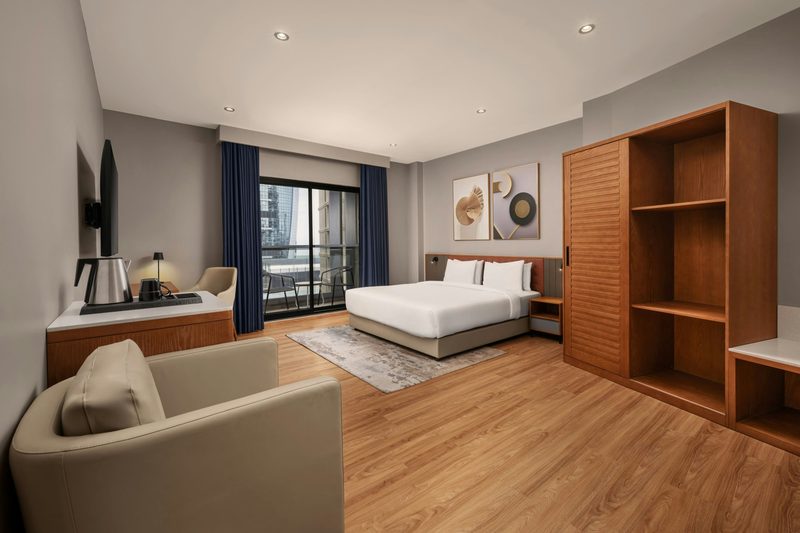
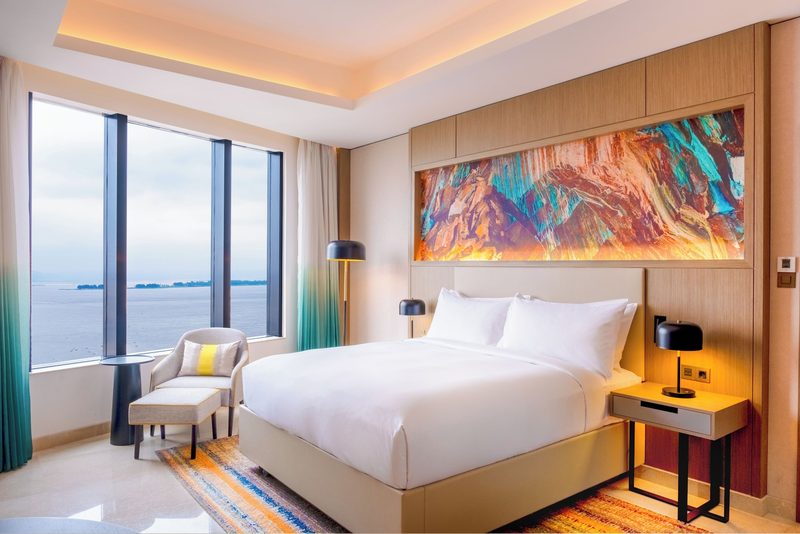
Where to Stay in Congo in April
Hand-picked hotels across price tiers for April travellers.
Public Holidays in April
Dates that affect opening hours, transport and crowds
Dimanche de Pâques
Known in English as Easter Sunday. Observed nationwide as a public holiday.
Lundi de Pâques
Known in English as Easter Monday. Observed nationwide as a public holiday.
Packing Checklist
Bookmark this page — your progress is saved between visits
Need the full list with shopping links?
Climate-specific gear, brand recommendations, and what to leave at home.
View Congo Packing List →Essential Tips
Insider knowledge and common pitfalls to avoid
Insider Knowledge
The ferry crossing between Brazzaville and Kinshasa at Beach Ngobila terminal ranks among Africa's most surreal borders. Two capital cities face each other across 4 km (2.5 miles) of river. It runs daily. April's high water delays departures by hours. Hold a DRC visa? Cross early. Bring patience. The return ferry never waits. The crossing takes twenty minutes. The mid-river view of both skylines justifies the bureaucratic circus.
Brazzaville's sapeurs turn elegant dressing into philosophy. This men's fashion subculture dates to the 1920s. Sundays along Avenue Matsoua in Bacongo quarter are prime viewing. They parade in tailored three-piece suits and imported shoes. The heat would flatten most people in shorts. April's overcast Sundays draw larger crowds. Cloud cover makes the performance bearable. Ask before photographing. Expect fabric sourcing conversations. They outmatch European department store expertise.
Negotiate transport prices before departure. Never after. This covers Brazzaville taxis, river pirogues, and upcountry 4x4 hire. Your use disappears once you board. Locals spend two or three minutes discussing fares with drivers beforehand. They expect the same from you. This is not confrontation. This is the system.
Marche Total in Brazzaville is Central Africa's largest market. The sensory assault is real. Dried fish stacks in pyramids. Aluminium pots clang under hammers, shaped on the spot. Fabric vendors unroll wax-print bolts. The colours look backlit. Arrive before 8 AM. Produce is freshest then. Heat has not turned aisles into saunas. The market sprawls across blocks with no clear layout. You will get lost. Getting lost reveals the best stalls.
Avoid These Mistakes
Never confuse Republic of Congo with Democratic Republic of Congo. Different countries. Different visa regimes. Different currencies: CFA franc versus Congolese franc. Different security situations entirely. Booking Kinshasa when you meant Brazzaville wastes weeks. Check airport codes on every confirmation. BZV means Brazzaville, Republic of Congo. FIH means Kinshasa, DRC.
Do not underestimate intercity travel times. Brazzaville to Pointe-Noire is 510 km (317 miles). That sounds like five hours. It takes ten to twelve on the national route in April. Rain degrades the surface. Most experienced travelers fly. Overland travel to Odzala-Kokoua or Nouabale-Ndoki requires days. Not hours. You need a 4x4. You need a driver who knows where roads wash out.
Never arrive without confirmed accommodation. Brazzaville has limited hotels meeting international standards. Pointe-Noire has fewer. Upcountry offers eco-lodges, booked months ahead through operating concessions, or nothing. April's low season helps availability slightly. Scarcity remains fundamental. Book everything before your flight.
Ready to plan your trip to Congo?
Now that you've got the research covered, here's where to go next.
Explore More Activities in Congo
Didn't see anything interesting yet?
Browse Viator's full catalog of tours, day trips, food experiences, and private guides in Congo.
See All Congo Tours on Viator